Online Backgammon for Faster, Smarter Play
24 August 2026A backgammon match can turn on one roll, but it is rarely decided by luck alone. Online backgammon puts a classic race-and-block strategy game in your pocket, where every move asks a fast question: push forward, build safety, attack a blot, or hold position for a better roll?
For players who want a game that is easy to start but hard to outthink, the appeal is obvious. A board is ready in seconds. Opponents are available without gathering around a table. And each match gives you a clean test of probability, positioning, patience, and nerve.
Why Online Backgammon Still Hits Different
Backgammon has survived for centuries because its rules are compact while its decisions stay sharp. You roll two dice, move your checkers toward home, and bear them off before your opponent does. That sounds simple until you must choose between making a safe point, leaving a vulnerable blot, or sending a checker into an open board.
The online format removes the friction around finding a game. You can play a quick match between classes, during a commute, or when you want something more tactical than a reflex-heavy mobile game. It also makes the social side more accessible. A casual game with a friend can become a rivalry fast when both players start remembering the mistakes from the last match.
Unlike games built around expensive upgrades or raw reaction speed, backgammon rewards repeatable thinking. Better board awareness matters. Knowing when to run, when to anchor, and when to hit can improve your results far more than chasing a lucky streak.
What Makes a Good Online Backgammon Game
Not every digital board delivers the same experience. A good game should get the fundamentals right first: readable checkers, clear legal moves, responsive turns, and dice results that feel transparent. If you cannot see the board state at a glance, strategy slows down for the wrong reason.
Fast Matchmaking Without Empty Tables
A multiplayer game needs active opponents. Quick matchmaking is useful when you want immediate action, while private games matter when you want to play friends or settle a score. The best setup gives you both options rather than forcing every player into a random queue.
Match length matters, too. A single game can be fast, but a longer session with multiple rounds gives strategy more room to develop. Casual players may prefer short matches. Competitive players often want enough time to recover from an unlucky opening and prove the stronger overall plan.
Controls That Do Not Get in the Way
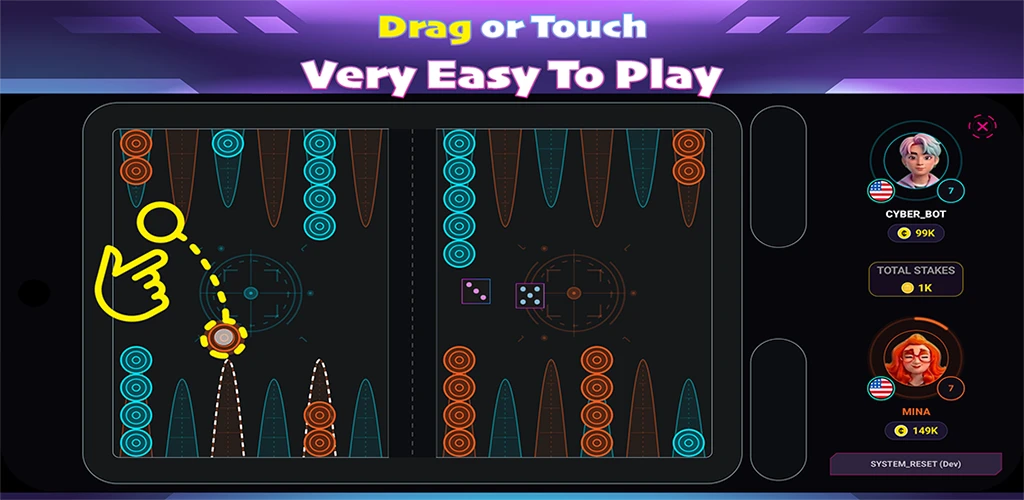
On mobile, input is part of the game. Tapping a checker should make the available destination clear, and moving should feel quick without making accidental plays easy. Automatic move suggestions can help newer players understand legal options, but they should not replace the player’s decision.
A clean interface also matters when the board gets crowded. Points, blot positions, the bar, and the bear-off area must remain easy to read on a phone screen. Small usability details reduce wasted time and keep attention where it belongs: on the position.
Fair Play and Clear Game Rules
Competitive games need trust. Players should understand how turns work, what happens if a connection drops, and whether a match uses standard rules, a doubling cube, match scoring, or timed turns. Confusion over the rules creates arguments that have nothing to do with skill.
Fair play is not just about dice. It includes sensible time controls, clear rematch options, and systems that discourage players from repeatedly abandoning games when a position turns against them. A reliable online backgammon experience lets the match decide the winner.
The Moves That Improve Your Game First
You do not need to memorize every opening roll to play better today. Start by looking at your board as a system, not as 15 separate checkers racing home. Your goal is to create useful structure while limiting your opponent’s opportunities to attack.
Build Points, Not Just Distance
Moving a checker as far as possible can feel productive, but distance alone does not protect you. A made point – two or more checkers on the same triangle – cannot be landed on by your opponent. A chain of points creates a blockade that can trap an opposing checker behind it.
Early in a game, making inner-board points is especially valuable. They give you safer landing spots and make hits more dangerous for your opponent. If you send an opposing checker to the bar while your home board has several closed points, they may struggle to re-enter.
Respect the Blot
A single checker on a point is called a blot. Blots are exposed. Sometimes leaving one is the correct aggressive move, especially if it helps you make a key point or attack an opponent’s vulnerable checker. But leaving blots casually is how a comfortable race turns into a recovery mission.
Before moving, scan for your opponent’s hitting numbers. If they can land on your blot with many dice combinations, your move carries real risk. If only one or two rolls hit you and your move creates a strong position, the risk may be worth taking. That trade-off is the game.
Know When You Are Racing
Once both players are mostly clear of each other, the game becomes a race. At that point, blocking and hitting may matter less than bringing checkers home efficiently. Avoid wasting pips with unnecessary detours, and try to keep your checkers positioned so awkward rolls still have useful moves.
A rough pip count can help. Count the distance each checker needs to travel, then compare totals. You do not need perfect arithmetic every turn. Even a quick estimate tells you whether you should play safely, take a calculated shot, or focus entirely on speed.
Play With Better Online Habits
Digital games move quickly, especially when timers are active. The easiest way to throw away equity is to play on autopilot. Before committing a move, take a short scan: Can I be hit? Can I make a point? Can I hit? Am I ahead in the race? That four-part check catches many avoidable errors.
Do not blame every loss on the dice. Backgammon includes variance by design. A strong move can lose, and a weak move can win after a fortunate roll. The useful question is whether your decision gave you the best long-term chance. That mindset keeps frustrating matches from becoming bad habits.
If you play on a phone, protect the practical side of the experience as well. A stable connection matters in live matches. Close unnecessary background apps if your device is struggling, keep enough battery for a longer session, and use a comfortable screen orientation. Strategy is difficult enough without lag, missed taps, or a dying battery interrupting the board.
Social Play Makes Every Match More Useful
Playing strangers builds adaptability because you see different styles. Some players attack early. Others build defensive walls and wait for mistakes. Friends, however, are often the best training partners because you can replay positions, compare choices, and run rematches without pressure.
A friendly challenge is also a better way to learn the doubling cube, if your game includes it. The cube raises the stakes of a game when one side believes it has a meaningful advantage. Using it well requires position judgment, not just optimism. If you are new to cube play, start with low-pressure matches and focus on recognizing clear advantages before trying aggressive doubles.
TOLAN’s approach to digital gaming is built around direct utility, and that fits backgammon well: get into a match quickly, see the board clearly, and let the decisions create the competition.
Keep the Game Fun Without Playing Soft
Competitive does not have to mean reckless. Set a pace that matches the session. A two-minute game is great when you want quick action. A longer match is better when you want to test strategy, learn from mistakes, and see whether your plan holds up over several games.
The next time a roll gives you two or three legal choices, do not rush to the furthest move. Look for the move that improves your board, reduces your exposure, and gives your opponent fewer comfortable answers. That extra five seconds is where online backgammon stops being a dice game and starts becoming your game.
Gammonic – Backgammon
Play Online & Offline Board Game
Play the timeless game of backgammon! Enjoy online matches, challenging AI opponents, and fully customizable boards.
Check out Tolan’s backgammon game Gammonic!