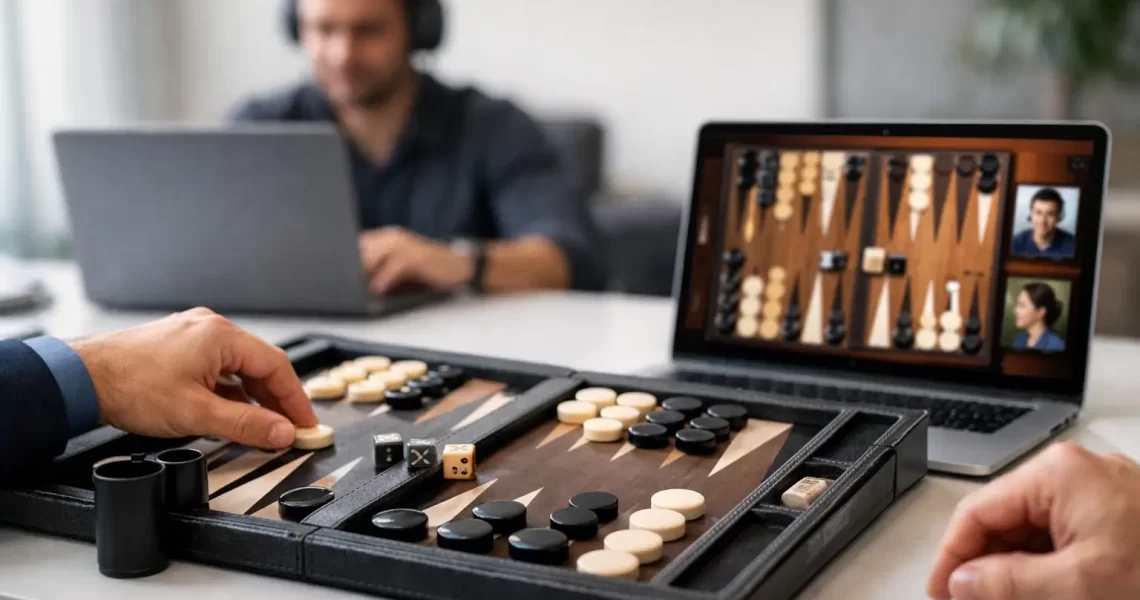
Multiplayer Backgammon Built to Compete
26 August 2026Multiplayer backgammon is not a slow board game trapped on a screen. At its best, it is a quick tactical contest where every roll creates a new problem, every move exposes a plan, and every opponent brings a different style to the board. You can start a match in seconds, but winning consistently still demands focus.
That mix is why online backgammon works so well for mobile players. It is easy to learn the basic movement rules, difficult to play cleanly under pressure, and social enough to stay interesting after the first few games. A good multiplayer experience should keep the board readable, the turns responsive, and the competition fair.
Why Multiplayer Backgammon Still Hits
Backgammon has survived for centuries because it never gives players the exact same match twice. Dice introduce chance, but chance does not remove skill. Strong players manage risk, build points, protect vulnerable checkers, and recognize when a safe move is actually too passive.
Multiplayer adds the part that solo puzzles cannot reproduce: adaptation. One opponent may race aggressively whenever they get an early lead. Another may build a defensive wall and wait for a blot. A fast player can pressure you into rushed decisions, while a patient player may force you to think several turns ahead. Reading those habits is part of the game.
For mobile gamers, the format also fits real life. A short match can fill a break without demanding an hour of uninterrupted play. Yet the strategy has enough depth to reward players who return, study their mistakes, and sharpen their decision-making over time.
What Makes an Online Match Feel Fair
The best multiplayer backgammon games do not need cluttered screens or complicated menus. They need reliable fundamentals. When a game is competitive, small technical problems can change the entire experience. A delayed move, unclear checker position, or dropped connection is more than an annoyance when the match is close.
Clear board visibility
You should be able to identify open points, blocked points, blots, and bearing-off positions at a glance. Strong contrast, readable checker colors, and clean move feedback matter more than flashy effects. On a phone screen, a simple board often performs better than a crowded one.
Responsive turns and stable sessions
Backgammon has a natural pace. Players need enough time to calculate options, but not so much time that each turn drags. Responsive controls keep the match moving, while stable multiplayer sessions make sure the game is decided by choices rather than connection trouble.
A timer can improve the energy of a match, especially for experienced players. It is not ideal for everyone, though. Beginners may prefer untimed games while they learn legal moves and basic strategy. The right mode depends on whether you want relaxed play or a tighter competitive challenge.
A level playing field
Fair competition starts with trustworthy dice behavior and consistent rules. Players should know how doubles work, what happens when a checker is hit, and when bearing off becomes legal. Clear rules prevent arguments and let the strategy take center stage.
It also helps when matchmaking respects skill differences. A new player thrown against a highly experienced opponent may learn something, but repeated one-sided losses are not fun. Balanced matches create better practice and keep both players engaged.
The Decisions That Win More Games
You cannot control the dice. You can control what you do with them. That is the core of backgammon strategy, and it is why experienced players often outperform opponents who chase the biggest-looking move every turn.
Early in a match, focus on building useful points rather than scattering your checkers across the board. Points in your home board make it harder for an opponent to re-enter after being hit. Points in the outfield can also slow their progress and give your own checkers safer routes forward.
Avoid leaving blots without a reason. A blot is a single checker sitting on a point, exposed to being hit. Sometimes leaving one is worth it because the move creates a stronger board, advances a key checker, or gives you a chance to hit first. Other times, it simply gives your opponent an easy target. The difference is not luck. It is position awareness.
When you are ahead in a race, simplify where possible. Bring checkers home efficiently and avoid creating unnecessary shots. When you are behind, you may need more volatility. Hitting a checker or making a risky play can give you a way back into the match, even if it also increases the chance of losing faster.
That trade-off is where multiplayer backgammon gets interesting. Safe moves are not automatically smart. Aggressive moves are not automatically reckless. The best choice depends on the board, the score, your opponent’s position, and how much risk you need to take.
A Practical Match Routine for Mobile Players
Good play does not require long theory sessions. A repeatable routine helps you make better decisions without slowing every turn to a crawl.
Before moving, scan the board in the same order each time. First, check whether you have any checkers on the bar. If you do, re-entry is your only priority. Next, look for forced moves and possible hits. Then identify blots you can protect, points you can make, and checkers that need to move toward home.
After that, ask one simple question: am I racing, attacking, or defending? If you are racing, reduce exposure and move efficiently. If you are attacking, build a strong home board and look for opportunities to trap an opposing checker. If you are defending, keep enough flexibility to avoid getting boxed in while waiting for a break in the position.
Finally, check the move you are about to make against the obvious reply. What rolls would let your opponent hit you? What points could they build? This takes only a few seconds and catches many avoidable mistakes.
Social Competition Makes the Classic Game Better
The board is the same, but multiplayer changes the energy. Beating an AI can test your tactical choices. Beating a real person adds momentum, pressure, and the satisfaction of knowing your plan held up against someone trying to stop it.
Social play also makes improvement easier to see. You will notice which opponents punish loose blots, which players struggle against a strong prime, and where your own habits become predictable. Maybe you rush the bearing-off phase. Maybe you play too safely when behind. Repeated matches reveal those patterns fast.
A platform such as TOLAN’s online backgammon game works best when it respects that competitive loop: get into a match quickly, make clear decisions, and enjoy the result without fighting the interface. The game should support the player, not become another obstacle to manage.
Common Mistakes That Cost Matches
Many losses come from a few repeat errors rather than one terrible roll. Players often move their farthest checker automatically, even when making a point would create a stronger position. Others hit every available blot, ignoring the fact that their own home board is too weak to hold the opponent back.
Another common mistake is treating every turn as isolated. A move that looks safe now may leave your next turn awkward because your checkers are split too widely. Try to create positions with several useful numbers available. Flexibility matters, especially when the dice do not cooperate.
Do not underestimate the endgame either. Bearing off quickly is good, but order matters. Leaving a checker stranded on a high point or exposing a late blot can turn a nearly finished race into a painful swing. Slow down briefly when the board starts to empty.
Play Fast, Think One Move Further
The strongest multiplayer backgammon sessions balance speed with intent. You do not need to calculate every possible dice combination like a tournament professional. You do need to recognize danger, build useful structure, and avoid handing over easy shots.
Start with clean, focused matches. Learn how your moves change the board, not just how far they travel. The next time the dice give you a difficult choice, take the extra second, look at your opponent’s reply, and make the move that keeps you in control.